HANNA LEW
Side
BPM
Tracklist
Time Wasted
Sunday
Another Twilight
Siloed
Replica
Damaged Melody
Move In Silence
Distance Of The Moon
The Cloc
e-mail reminder
If this item in stock, then you will get an infomation E-Mail!Indie / Alternative
“One foot out the door, another in the otherworld…”
So begins Hannah Lew’s debut, self-titled solo record, soaked in imperious, wide-eyed pop songwriting and a girl-group/post punk
aesthetic that belies the artist’s history in the U.S. underground. A towering, hook-laden album, it’s infused with an optimism and
surrealism that conversely deals with the times we find ourselves in.
Recorded at home in Richmond, CA and in The Best House studio with Maryam Qudus in Oakland CA, with the assistance of a crack
team of West Coast musicians, this album sees Hannah Lew stepping out from behind the legacy of her two groups Grass Widow and
Cold Beat. While musically bearing similarities with her previous work, “Hannah Lew” is a bold leap into direct pop territory, making
ample use of a vocal style that teases out the inherent melancholy in her melodies. Mastered by Sarah Register, each song is a
perfectly honed nugget that frequently pulls the heart in two directions at once.
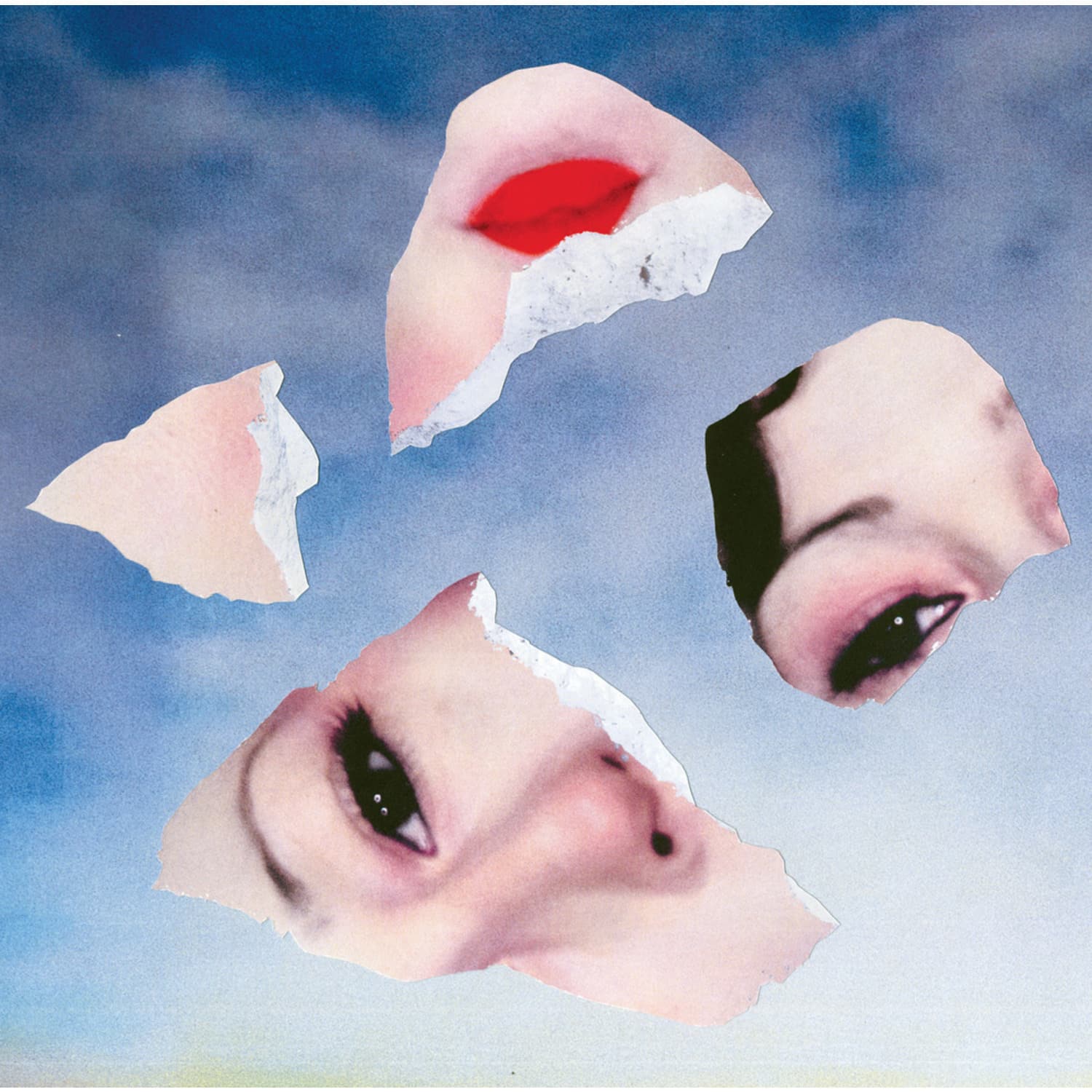
Themes of change, breaking up, shattering old ways of being are shot through the record. For the front cover, a photograph of the
artist’s face was printed, ripped up and re-assembled, resembling the creative process embarked upon by Lew for her first “solo”
material. The album feels instinctual, almost dream-like in its assemblage of sweeping synths and pulsating, propulsive drum machine
beat patterns with Lew’s vocal performances sensitive and caressing over the top. Increasingly relying on the subconscious and
dreams to guide her creative process, Hannah Lew frequently abandons literal interpretations or linear narratives, the songs seeming
to exist in a swooning, effortless flow-state while remaining emotionally hard hitting.
On an album where every song could be a single, there are kaleidoscopic shades and varying emotional tones in abundance. First
single Another Twilight is carried along a pumping, Italo-disco-style 4/4 beat and mono-synth bass line, the low end pulling at the
heart and body. Lew’s vocal melody teases the track before swan-diving into a gorgeous chorus as she sings “it’s all over baby and I
don’t mind… in decline, I take my time…” The album is suffused with moments like this. On slow builder Damaged Melody, an
arpeggiated synth elongates the verse before a cascading synth showers down melodic glitter. The stunning Replica uses dual
swirling synth patterns before a driving, synthpop chorus for the ages carries Hannah Lew’s vocal into the stereo field, sailing in on a
high register singed with the embers of a break up.
In a departure from previous groups, her solo songs are guided by dreams and free association inspired by Dada and the Surrealist
movement and sculpted afterwards. As such, the songs reveal themselves on repeated listens, revealing traces of heartbreak inspired
by both personal and global elements - Hannah Lew regards the album “a wartime album.” On Move In Silence, Lew intones “there’s
a war outside, just out of view,” revealing the dichotomy at play throughout. With the songs evolving naturally and in a flow state, the
pressures and sadnesses of the modern age bleed through, mixed in with Lew’s inherent love, sensitivity and fractured-but-intact
optimism. On the swooning, sublime Sunday layers of Numanoid synths open up for the commanding vocal performance pontificating
on grief, love, pain as she “feels the ache on Sunday…” As the chorus builds and Lew’s call-and-response vocal adds to the emotional
tension, it almost feels like too much to take.
Elsewhere, there are echoes of Hannah Lew’s previous work. On Time Wasted a bass guitar comes in with a heavy, punk attack
before the synths and vocal harmonies reminiscent of later Cold Beat elevate everything. The glassy, sweetly resigned closer The
Clock sounds like so classic it could be cover, a sweetened Jesus & Mary Chain tune perhaps, before it erupts into volcanic chorus
that could only come from Hannah Lew in 2026.[info sheet from distr.]