
Dona Onete
BANZEIRO
(LP + MP3)
12 Inch LP
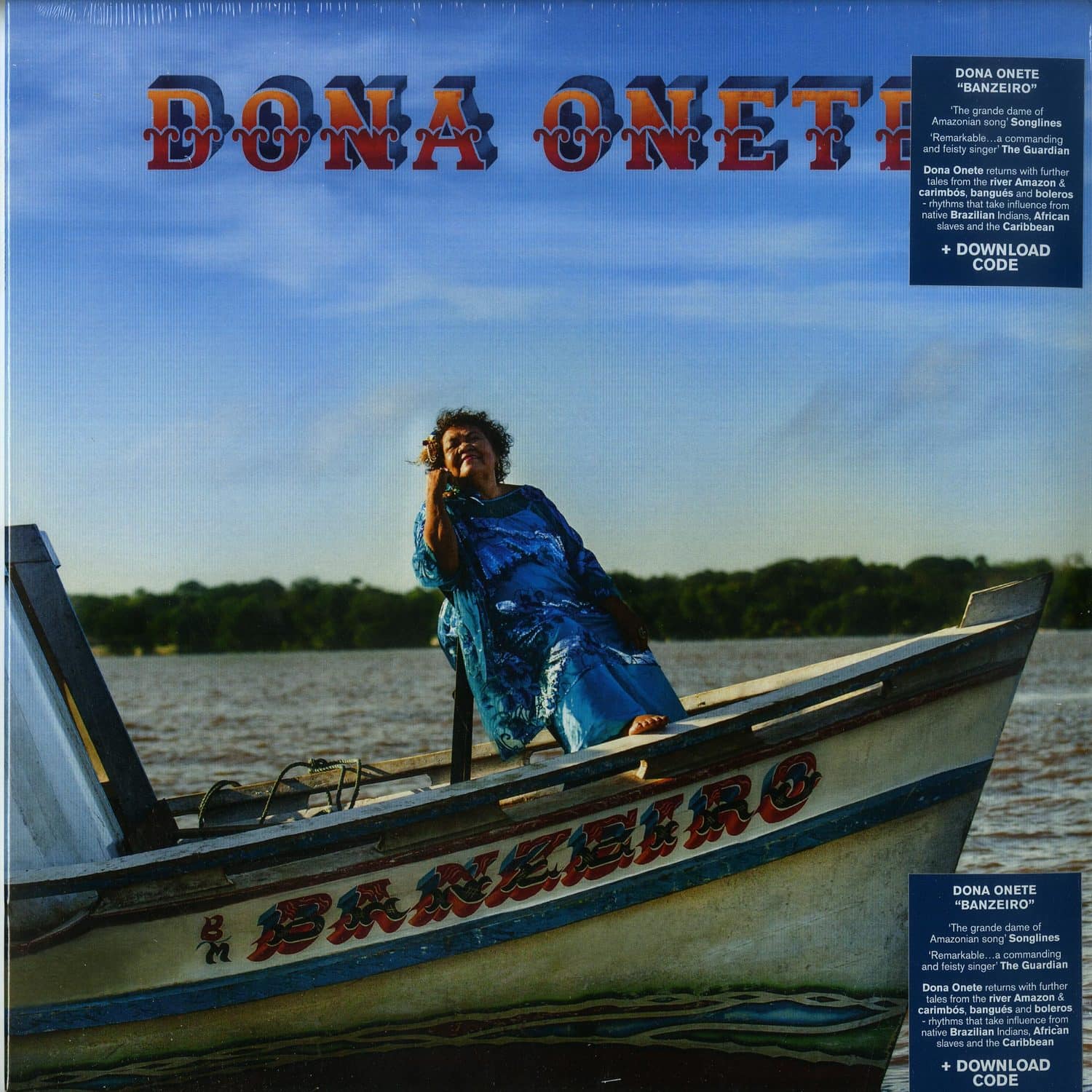
Dona Onete - ‘the grande dame of Amazonian song’ - returns with further tales from the river Amazon on her sophomore album Banzeiro. Whether she’s championing gay rights, singing about the delights of indecent proposals or praising a former lover for his ‘crazy ways of making love’, Banzeiro is defined by Onete’s honest reflections on life, love and sex, as well as her delight in the everyday pleasures of life in the Amazon, whether that’s spicy seasoning, salty kisses or fishy-smelling water.
Formerly a history teacher, folklore researcher, union representative, culture secretary and children’s author - “I never thought I would be a singer” she claims - Onete recorded her debut album Feitiço Caboclo at 73. A cult figure in Brazil and an ambassador for Amazonian culture, the music she sings is a unique mix of rhythms from native Brazilians, African slaves and the Caribbean - epitomised in the joyous carimbós that are her trademark.
Born in the Amazonian region of Pará in 1938, Onete is a mix of native Indian from her mother’s side and African from her father. She first started to sing after a chance riverside encounter: “I was washing clothes by the river and one day I saw a dolphin and sung for him. The next day I sang again, and two dolphins came, then a whole family!”.
A self-proclaimed “teenage-dreamer” who embraced music “because everything was forbidden by my parents”, by the age of 15 Onete was singing in bars, yet her musical ambitions were soon crushed: “I was married at 22 and when I tried to sing at home my husband didn’t like it so I had to stop”.
She became an ardent researcher of the rhythms, dances and traditions of the Amazon’s indigenous and black people, which inspired her to begin composing songs herself. Unable to sing at home, she began to incorporate her compositions in her work as a history teacher, using her songs to explain the history of the region to her students: “Nowadays indigenous people can be proud of their heritage but years ago this wasn’t the case.”
In the early eighties Onete quit teaching to campaign for workers’ rights and following retirement in 1990 she became her region’s Municipal Secretary of Culture from 1993-1996, a role she embraced: “I helped local musicians and local culture that people didn’t value. I brought my culture to the fore”. In the early 2000s Onete’s second husband encouraged her musical side and it was whilst singing at a friend’s party in 2006 that she was overheard by a local band. Initially rejecting their offer to sing with them, she was eventually persuaded and soon became a local celebrity known for her risque lyrics. A debut album, Feitiço Caboclo, soon followed and her contemporary take on the music of Para was a critical success with Onete touring Brazil playing to crowds of thousands: “Traditional carimbó songs are about nature and tradition - I modernised it by singing about love and sex and taking influence from samba and pagode”.
International critics were next to fall for this sassy, saucy and sexy septuagenarian with Les Inrocks making the album one of their top 5 ‘world’ releases that year. European festival performances followed in 2015 - including a main stage spot at Womad UK - with a US tour taking in Chicago, Cleveland and New York in September 2016. “Sometimes, when you think you’ve given all you’ve got, you realise that, in fact, you have a lot more ahead of you”, she opines.
Banzeiro is the wave that’s created as boats pass through the water and with it’s pulsating saxophone riff, insistent guitar line, thundering percussion and Onete’s charged lyrics the album title track, a banguê – raucous high-octane ‘Amazonian ska’ – is a musical tsunami.
Onete is at her most potent on Na Linha do Arco Iris (The Line of the Rainbow), a rallying cry of support for her LGBT fans. Inspired by a young gay man she knew who was afraid to come out, the lyrics are a call to “come out of the wardrobe, cross the line of the rainbow and be who you want to be”. Faceira and No Meio do Pitiú are joyous carimbós with the latter surely the only song to recount the charms of Pitiú - the fishy-smelling water that floods Belém’s legendary fish-market Ver-o-Peso as the ice defrosts.
No Sabor do Beijo (The Taste of a Kiss) delights in recounting the different flavours a kiss can have: ‘hot, frozen, sweet, salty, bold . . . abusive’, whilst Lua Jaci (Jaci Moon) recounts a journey to a local island for a concert: “When I arrived they didn’t have a soundsystem - they were very poor people. All they had was this huge, beautiful moon . . . Lua Jaci’. The cumbia-influenced Quiemoso e Tremoso is about seasoning Onete invented that reflects the mix of people from Pará: “Quiemoso is a spice from the Africans that burns the mouth, jambu is a spice from the indigenous that makes the mouth tremble (tremoso), whilst the olive oil is from the Portuguese and holds it together”.
The boleros Onete offers provide respite from the heat of the tropical night and a welcome chance to drop the tempo. On Coracao Brecho Onete sings of how her heart has become a second-hand store (brecho) full of happy and sad memories whilst Quando eu Te Conheci (When I Met You) is a song even she was unsure of recording because of it’s risqué lyric ‘Eu adorei teu jeito louco, Muito louco, Muito louco, De fazer amor – I adore your crazy way, Very crazy, Very crazy, Of making love’.[info from label]